
Creative Ideas for Using Freeze-Dried Fruits
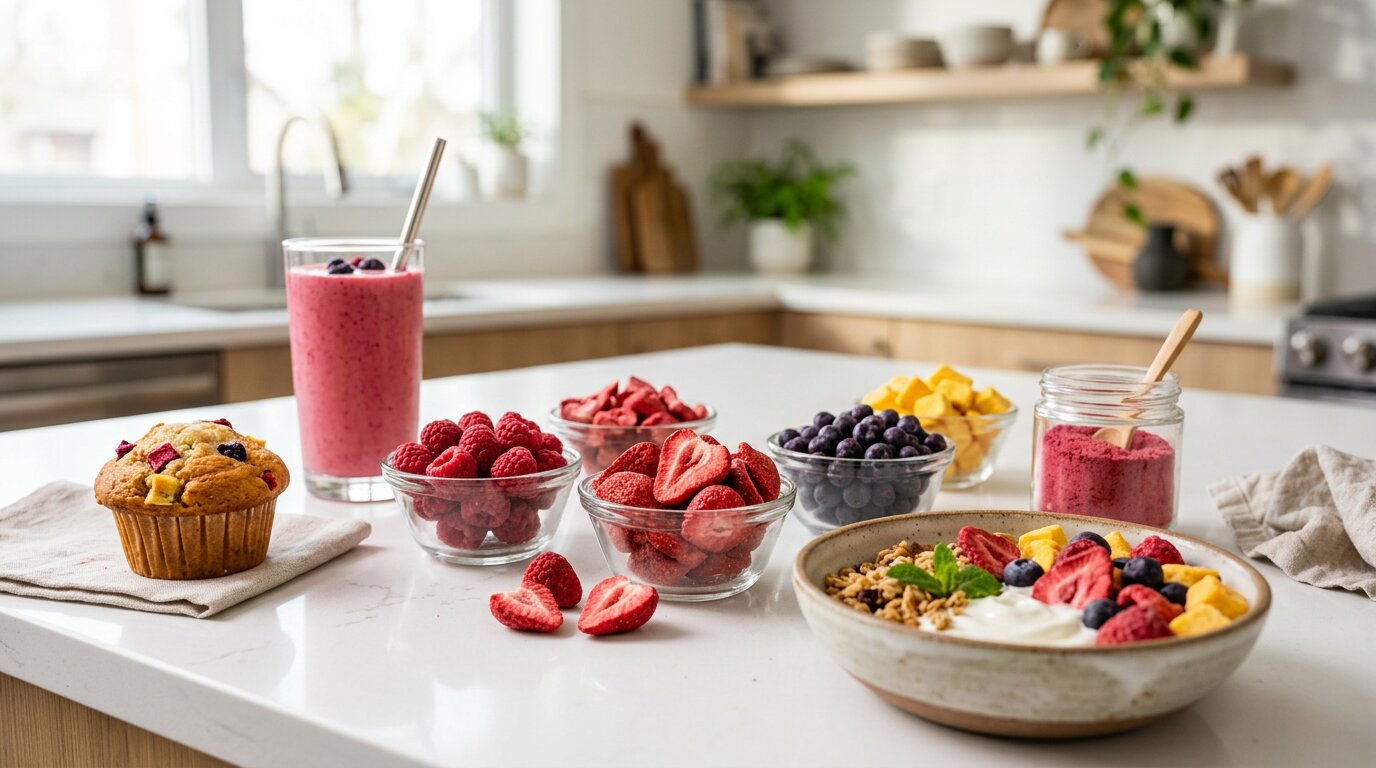
You probably think of freeze-dried fruit as a simple snack, but it’s one of the most versatile ingredients you can keep in your pantry. You can crush it into fine powders, fold whole pieces into batters, or use it to add bright flavor without extra moisture. From breakfast upgrades to eye-catching desserts and kid-friendly treats, you’ll find plenty of smart ways to use it once you see how easily it transforms everyday foods.
Quick Ways to Use Freeze-Dried Fruit
Freeze-dried fruit can be used to add flavor and nutrients with minimal preparation. It blends well with milk or yogurt to make smoothies that are thick and chilled without the need for ice, and its natural sugars often reduce the need for added sweeteners.
It can also be added directly to hot oatmeal or cold cereal. In this context, it contributes color, a mild sweetness, and a contrasting texture. Another simple use is mixing chopped freeze-dried fruit into yogurt or cottage cheese.
The fruit absorbs some moisture and becomes slightly softer while remaining somewhat chewy, which can increase the perceived satiety of the snack. Because freeze-dried fruit retains most of the fiber present in fresh fruit, these options can help increase overall fiber intake with limited effort.
Breakfast Ideas With Freeze-Dried Fruit
You can expand basic snack-style uses of freeze-dried fruit into more complete breakfast options. For example, add freeze-dried strawberries, blueberries, and mangoes directly to a blender with almond milk, Greek yogurt, cinnamon, and fresh fruit. This produces a thick, cold smoothie without the need for ice, as the freeze-dried fruit helps create body and a chilled texture.
Fruit powders offer more precise control over sweetness and flavor intensity. As a general guideline, one tablespoon of fruit powder contains roughly the natural sugars found in about one cup of the corresponding fresh fruit, though this can vary by brand and fruit type. This allows you to adjust the sweetness of oatmeal, yogurt, or cereal more accurately. Sprinkling berry powder over hot oats or cereal adds color and flavor without extra bulk. Rehydrated pumpkin powder can be stirred into porridge or pancake batter, and banana powder can be blended into waffles, muffins, or smoothie bowls to provide natural sweetness and fruit flavor without added refined sugar.
Beyond sweet breakfasts, freeze-dried ingredients can also support quick savory meals when time is limited. A practical example is freeze dried soup, which can be prepared simply by adding hot water and allowing it to rehydrate for a few minutes. This makes it a convenient option for busy mornings when a full-cooked meal isn’t realistic, but a warm, balanced dish is still preferred.
Some varieties include vegetables, legumes, or grains, which can complement breakfast routines by providing a more filling alternative to sugary options. This flexibility shows how shelf-stable foods can bridge the gap between convenience and nutrition without requiring extensive preparation.
Snacks and Trail Mixes With Freeze-Dried Fruit
For portable snacks and trail mixes, freeze-dried fruit offers concentrated flavor, a light, crunchy texture, and a long shelf life without contributing moisture. It can be added directly to trail mixes without substantially increasing the risk of sogginess or spoilage during storage or transport.
A practical option is to combine freeze-dried strawberries, mango, and pineapple with nuts and seeds such as almonds, cashews, and pumpkin seeds to create a lightweight, energy-dense snack suitable for hiking. When consumed with water, about one cup of freeze-dried berries typically rehydrates to a volume similar to roughly three cups of fresh fruit, depending on the fruit type and degree of drying. Freeze-dried apple pieces can be mixed into granola-based blends to add mild chew and natural sweetness.
To maximize shelf life and maintain texture, store trail mixes containing freeze-dried fruit in airtight packaging. Vacuum-sealed portions kept in a cool, dry place can often remain palatable for up to 12 months, though actual storage life may vary by product and storage conditions.
Baked Desserts With Freeze-Dried Fruit
Golden cakes, bars, and cookies benefit from the concentrated flavor and low moisture content of freeze-dried fruit. The reduced water activity helps maintain structure, prevents sogginess, and can extend shelf life compared to using fresh fruit.
For example, you can stir freeze-dried blueberries into muffin batter and bake at 350°F for about 18–22 minutes. The fruit maintains its shape and provides distinct pockets of flavor without adding excess moisture that might lead to dense or underbaked areas.
Freeze-dried corn can be folded into cornbread batter to introduce sweetness and texture while preserving the intended crumb. Because the kernels are dry, they're less likely to disrupt the ratio of liquid to dry ingredients.
For desserts requiring a softer fruit component, freeze-dried apricots can be rehydrated before baking and used as a filling layer, such as beneath a chocolate–tahini ganache in a tart. Rehydration restores some chew and moisture while still offering more controlled water content than fresh fruit. Overall, freeze-dried fruit provides consistent flavor and texture outcomes in a wide range of baked goods.
Decorating Cakes and Cookies With Freeze-Dried Fruit
Beyond enhancing flavor in the batter, freeze-dried fruit can also be used effectively on the surface of cakes and cookies, where it contributes color, texture, and concentrated flavor without releasing moisture.
Finely crushed freeze-dried strawberries or raspberries can be sifted over frosting to create a dry, tangy finish that doesn't bleed into the icing.
Whole freeze-dried blueberries can be gently pressed into soft cookie dough before baking; they retain their shape and develop a chewy texture.
Small pieces of mango or pineapple can be scattered over buttercream to provide a crisp topping that remains stable for several days in a cool, dry environment.
Thin slices of freeze-dried apple can be placed on cakes as lightweight decorative elements and, if desired, finished with an edible luster dust for additional visual contrast.
Powdered freeze-dried blackberries can also be blended into royal icing to produce a deep purple color and a subtle fruit flavor without thinning the icing.
Smoothies and Shakes With Freeze-Dried Fruit
One practical way to use freeze-dried fruit is in smoothies and shakes. Freeze-dried pieces contribute concentrated flavor, natural sweetness, and color without increasing the water content, which helps maintain a thicker consistency. Because they're dry and often stored at room temperature, they're also convenient to keep on hand compared with fresh or frozen fruit.
When blended with liquid, freeze-dried fruits such as strawberries, blueberries, and mangoes soften and help thicken the drink, so additional ice is often unnecessary. This can reduce dilution and keep flavors more pronounced.
To prepare a basic smoothie, combine freeze-dried fruit with a liquid such as milk, plant-based milk, fruit juice, or yogurt. For example, a banana, peach, and blackberry smoothie can be made with almond milk, Greek yogurt, freeze-dried banana slices, peach pieces, and blackberries. A small amount of honey or maple syrup may be added if additional sweetness is desired, and spices such as cinnamon can provide extra flavor. Blend until the mixture is smooth, then adjust with more liquid for a thinner drink or additional fruit or yogurt for a thicker texture.
Sauces, Coulis, and Fruit Condiments
Instead of using only fresh fruit, freeze-dried pieces and powders can be turned into sauces, coulis, and condiments with consistent flavor and texture. To make a basic coulis, rehydrate 1 cup of freeze-dried fruit in 2–3 tablespoons of water for about 10 minutes, then purée and strain to remove seeds and larger particles.
For a concentrated cranberry coulis, simmer ¾ cup freeze-dried cranberries with ½ cup sugar and ½ cup water until the fruit softens and the mixture slightly thickens; it will typically keep in the refrigerator for 5–7 days.
A fruit-based condiment similar to ketchup can be prepared by blending rehydrated strawberries or raspberries with lemon juice and salt, producing a tangy, sweet-sour sauce that generally keeps for up to two weeks under refrigeration, assuming clean handling and storage.
Acidic, fruit-forward sauces can also be made directly from powders. Stir mango or pineapple powder into warm cider vinegar to form a quick gastrique-style sauce, adjusting the ratio of powder to vinegar to control sweetness and intensity.
Berry powders can be whisked into warm pan drippings to thicken and enrich a sauce, adding color and fruit flavor without additional starch. These methods rely on the high flavor concentration and low moisture content of freeze-dried products, which allows for rapid hydration, predictable thickening, and relatively stable refrigerated shelf life when stored in clean, airtight containers.
Freeze-Dried Fruit Powders for Rubs and Toppings
Freeze-dried fruit powders offer a way to add concentrated fruit flavor to seasonings and rubs without introducing moisture. Because the water has been removed, these powders mix easily with dry spices and maintain a shelf-stable, free-flowing texture, making them suitable for dry rubs and toppings.
For example, pineapple skin powder can be combined with brown sugar, sesame seeds, ground ginger, and Chinese five-spice to create a rub that produces a sweet-savory crust on meats or grilled vegetables. A typical starting ratio is about 2 tablespoons of pineapple powder per cup of rub, adjusted to taste.
Similarly, lime powder can be mixed with chili powder, garlic powder, onion powder, salt, and black pepper to season items such as grilled zucchini or dehydrated cucumber chips. Using about 2 tablespoons of lime powder in a small batch of rub provides noticeable acidity and citrus flavor without making the mixture wet or clumpy.
Berry powders, such as cherry or blackberry, can be lightly dusted over proteins before grilling or smoking to add tart, fruity notes and color. Because they contain natural sugars and acids, these powders can contribute to browning and a more complex flavor profile in dry barbecue-style applications.
Kid-Friendly Freeze-Dried Fruit Ideas
Parents seeking low-mess snacks can use freeze-dried fruits to create options that are appealing to children while still providing nutritional value. For example, children can assemble simple parfaits using yogurt or oatmeal topped with freeze-dried strawberry pieces, which add texture and a mild fruit flavor without excess moisture.
Freeze-dried banana slices can be coated in a thin layer of melted dark chocolate and allowed to harden. This creates a snack that offers some dietary fiber and small amounts of minerals such as potassium, while the chocolate contributes limited amounts of antioxidants, depending on its cocoa content. Because the fruit is dry, it's less likely to create sticky residue compared with fresh fruit.
Freeze-dried fruits can also be included in homemade trail-mix portions. A mixture of apples, mango, and blueberries can provide a source of fiber and vitamin C in a compact serving. A typical ¼-cup portion of mixed freeze-dried fruit often contains around 2–3 grams of fiber and a measurable amount of vitamin C, though exact values vary by brand and fruit type, so checking the nutrition label is recommended.
Finely ground freeze-dried raspberries can be mixed into milk or unsweetened yogurt to add color and a tart-sweet flavor without added liquid. This can contribute a small amount of fiber and vitamin C, again depending on product-specific nutrition information.
For baked goods, chopped freeze-dried cranberries can be mixed into cookie dough. This can add flavor and some phytonutrients without altering the dough’s moisture level as much as fresh or frozen fruit would. These cookies can be portioned for lunchboxes or snacks, providing a more stable fruit component that doesn't require refrigeration, while still being an energy-dense treat best consumed in moderation.
How to Store Freeze-Dried Fruit and Leftovers
Store freeze-dried fruit in airtight containers with a desiccant or oxygen absorber to limit moisture exposure and reduce clumping. Under cool, dark, and dry conditions, most whole freeze-dried fruits can maintain quality for up to about a year.
Keep powdered freeze-dried fruit in tightly sealed jars and plan to use it within 6–9 months, or only grind what you expect to use within 1–2 months. Store whole pieces separately from powders, as whole pieces generally retain quality longer and are more flexible for different uses. Vacuum sealing typically offers limited additional benefit for powders compared with using well-sealed jars. If apple or banana powders clump, you can break up the clumps in a blender or food processor, or mix in a small amount of a neutral starch such as arrowroot before storage to improve flow and reduce future clumping.
Conclusion
Freeze-dried fruit lets you add big flavor, color, and crunch with almost no effort. Keep a few favorites in your pantry and you’ll always have a quick way to upgrade breakfast, snacks, and desserts. Experiment with different fruits, from tangy berries to sweet mango, and try them whole, crushed, or powdered. With smart storage, they’re always ready when you are—so play, taste, and enjoy how simple it is to get creative.